Systems Engineering as Defined by ISO/IEC/IEEE 15288:2015
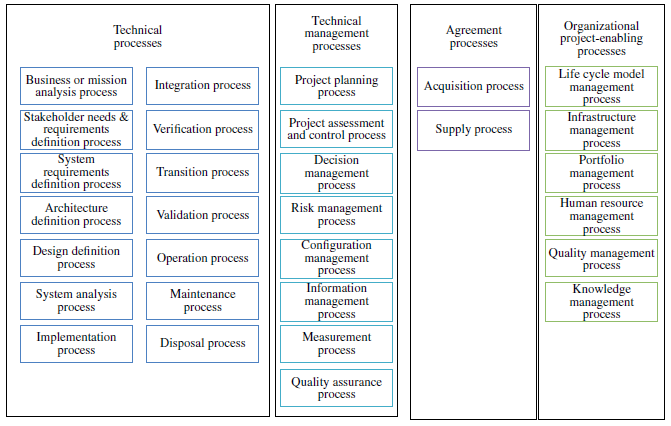
Systems and software engineering - System life cycle processes 15288:2018 is published under a joint project by ISO, IEC, and IEEE. Figure 1.1 is adopted from (ISO/IEC/IEEE 15288) depicts the processes defined within 15288:2015.
Technical Processes
The technical processes of 15288: 2015 describe the activities directly associated with the definition, design, development, delivery and support of the system. Each process plays a role in the end to end life cycle of a system. Remember that a SE team should apply all of theses processes in the development of a systems solution regardless of the problem or the solution. What changes from project to project is the level of effort and complexity of engineering data created for the project. The Activity Hierarchy Model in Figure 2 represents the processes depicted in Figure 1.
Figure 2 is generated from a MBSE tool based on the information shown in Figure 1. Entering all of the processes into a MBSE tool transforms the static diagram in Figure 1 into data entities allowing the entities represented by the processes to be used in multiple models. See the MBSE article for more information.
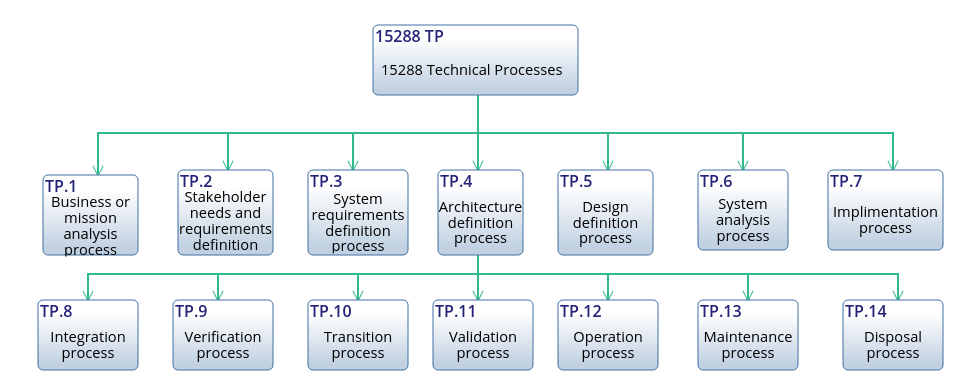
The Technical Processes define the activities directly associated with system lifecycle.
Technical Management Processes
Agreement Processes
CABOKtip: The 15288 Agreement Process area is similar to the PMBOK Project Procurement Management Knowledge Area which includes the process areas: Plan Procurement Management, Conducting Procurement and Controlling Procurement knowledge areas within the PMI Project Management Body of Knowledge (PMBoK) (PMI 2017).
Organization Project Enabling Processes
CABOKtip: The Organizational Process Area area is analogous to the Organizational Process Assets within the PMBoK (PMI 2017).